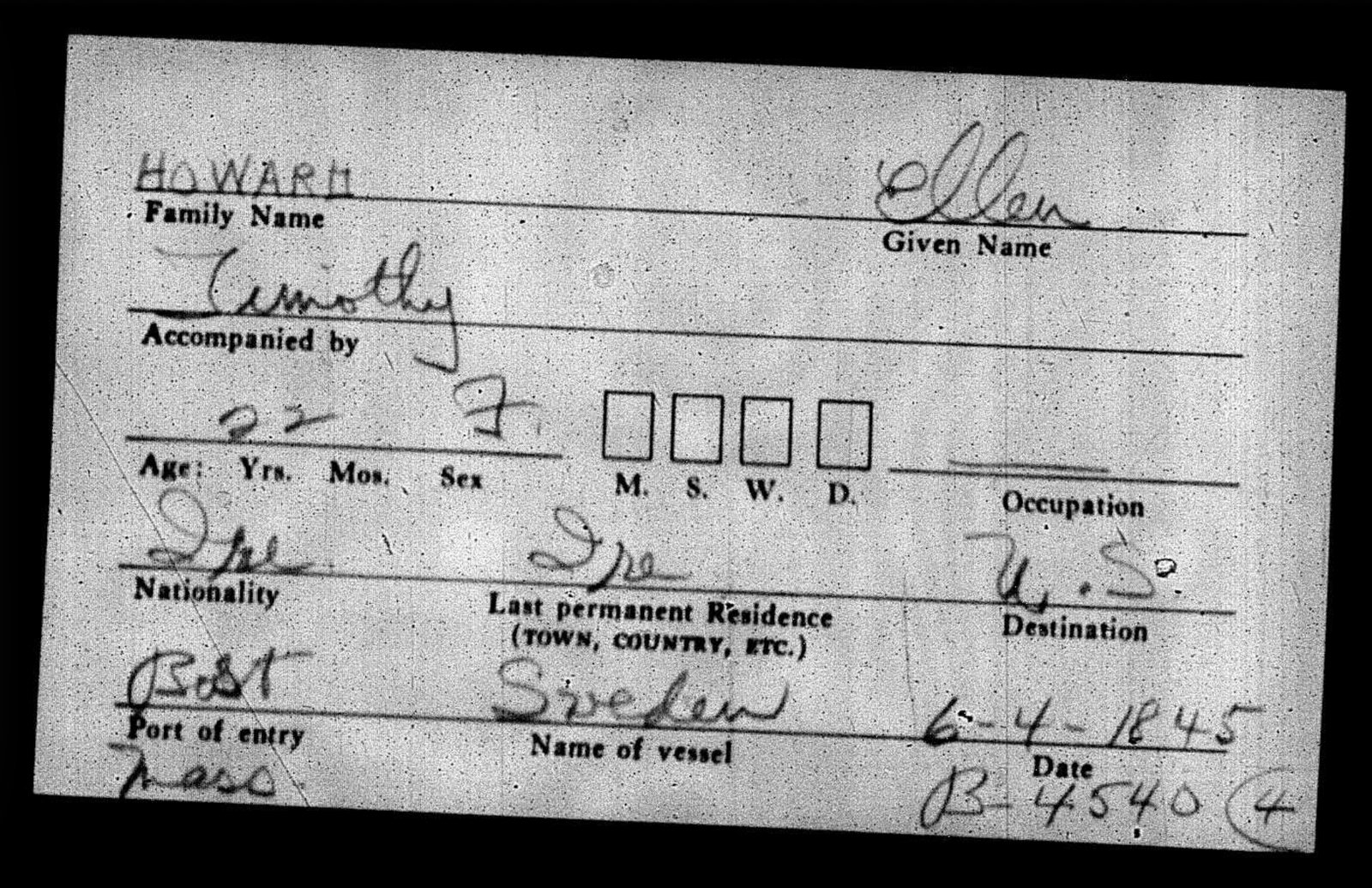
1845 · Boston
The arrival card
The moment the Howards reach America: Ellen, 22, with brother Timothy, off the ship Sweden. Four months later, the Famine begins.
Quirk & Howard · est. 1844
The story of William Quirk & Ellen Howard, and the sixty‑four acres they made their own
In the 1840s, two young neighbors from the hills of County Tipperary, Ireland, made the same enormous decision a few years apart. They left. William Quirk crossed the Atlantic first and began clearing a farm from the Adirondack forest. Ellen Howard followed in 1845, months ahead of the Famine. They married, raised five children, and held the land for generations. Everyone at this reunion descends from the two of them.
Part One · The Story
Every event below comes from an original record — a deed, a census page, a ship arrival card, a will, a tombstone. The gold entries are the moments in your direct line.
ABT. 1810 · CO. TIPPERARY
Among the Quirke tenant farms of Baurroe and Curragh townlands, Latteragh parish — two miles from the Howards of Glenmore Upper. The families were neighbors a generation before America.
BY OCT. 1844 · ALDER BROOK, N.Y.
Years before the Famine, he is clearing sixty-four acres of Gerrit Smith’s Adirondack land — a fact preserved in a single tax clause in a later deed.
Deed clause: “subject to taxes from October 9th, 1844”JUNE 4, 1845 · BOSTON
Brother and sister, twenty-two and twenty-one, off the ship Sweden from Liverpool — four months before the potato blight reached Ireland. Within two years, Ellen marries William.
Boston arrival index, June 4, 18451848–1854
Mary, Edward, Margaret, Johanna, and Julia — each named, by Irish custom, for the grandparents and aunts left behind in Tipperary.
1850–1855
He appears in the 1850 census — farmer, aged forty — and never in a record again. New York kept no death certificates then. Finding his exact death date is still the family’s open quest.
1850 U.S. Census, Town of Franklin, dwelling 34JULY 30, 1855
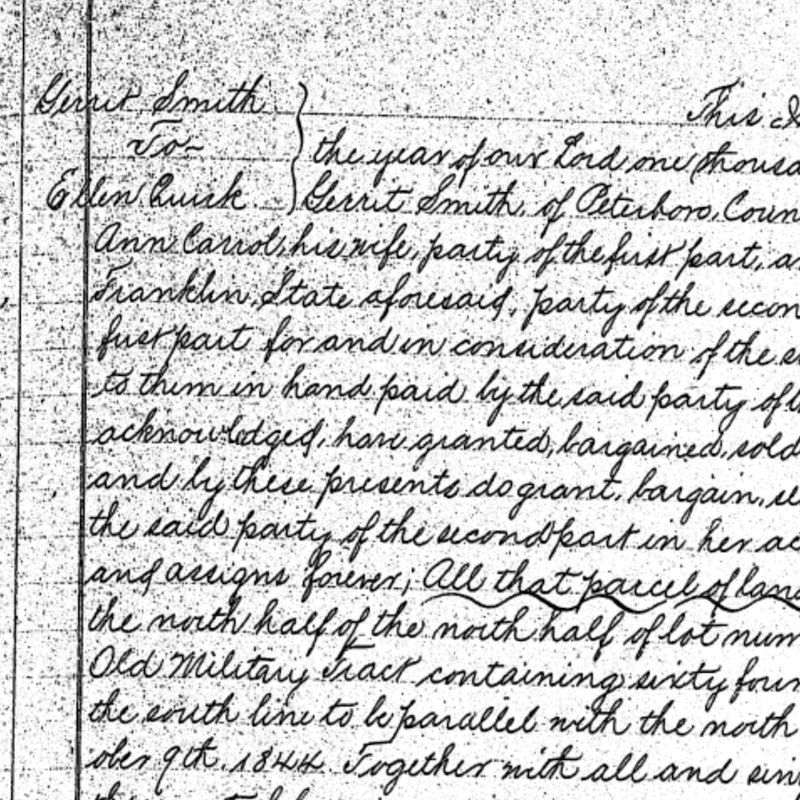
Gerrit Smith deeds the sixty-four acres to “Ellen Quirk… in her actual possession now being” for $150. A widow in her early thirties, unable to read or write, becomes a landowner.
Franklin Co. Deeds, Liber 24 / p. 4311860–1880
Census after census records Ellen at the head of a working farm, its value climbing, her brothers Thomas and Dennis on the neighboring lots and son Edward starting his own farm next door.
1876
The county atlas surveyors walk the roads and print her name on Lot 65 — one of only four women named as landholders on the entire sheet.
NOV. 6, 1886
In her farmhouse kitchen, surrounded by neighbors from the old country, Ellen signs her will with an X — dividing the farm with great care between Margaret, blind since her teens, and Julia.
Franklin Co. Wills, Vol. 9, pp. 275–279MAR. 20, 1888
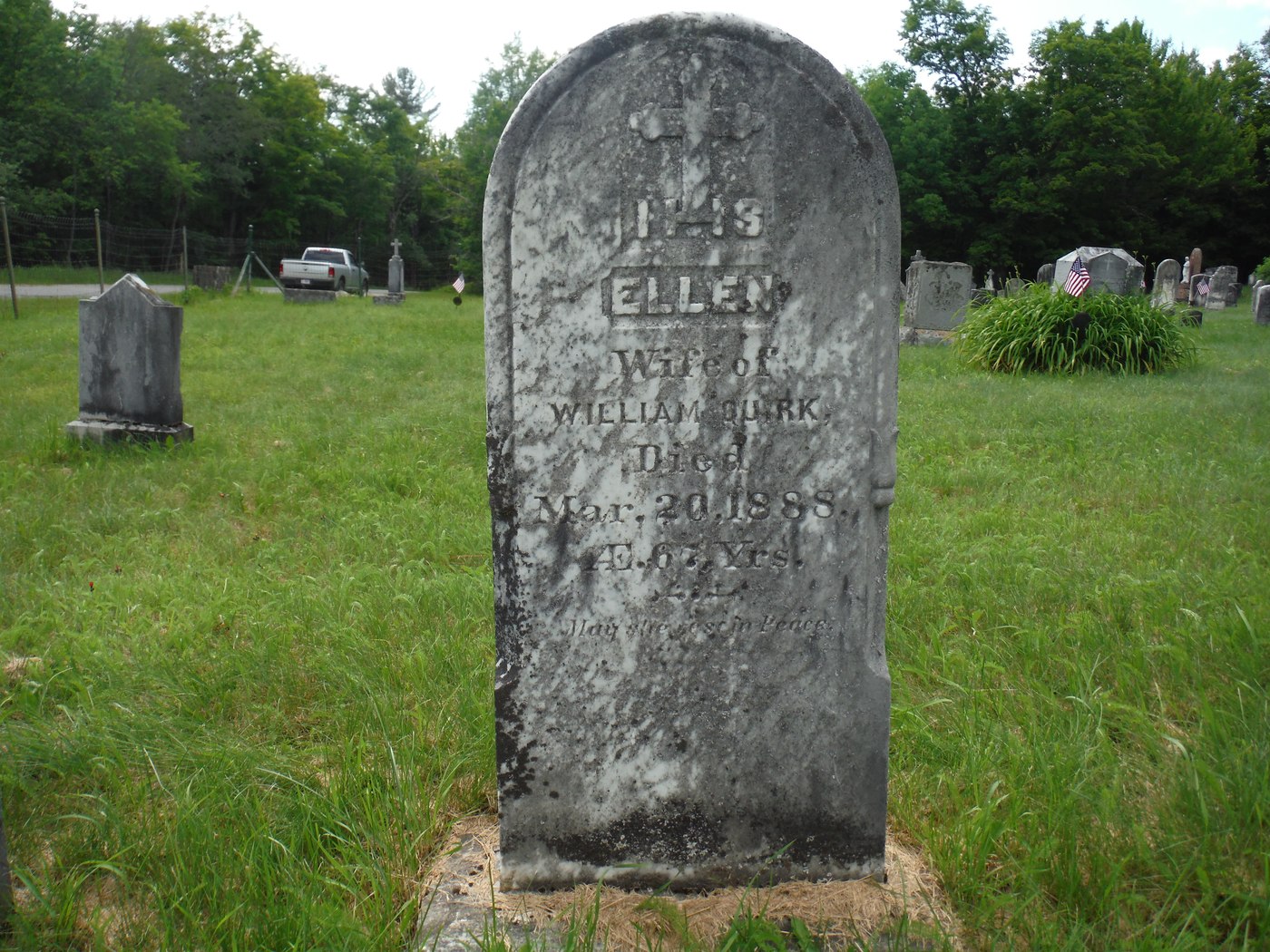
Seven weeks after Timothy, the brother who shared her crossing. Her stone at St. Rose of Lima restores the name she is remembered by: Wife of William Quirk.
1890
The son who started with ten acres pays $1,300 for one hundred sixteen — with the district schoolhouse on it, where his children learn to read and write. Among them: William John Quirk, ancestor of everyone at this reunion.
Franklin Co. Deeds, Liber 87 / p. 3051928–1938
Margaret, last of the Quirks on the land, sells in 1928 after an 84-year family tenure. The south half passes through Howard and Ryan hands until 1938 — the old Tipperary network holding on to the very end.
JULY 2026
Four, five, and six generations on — with the whole story, at last, written down.
Part Two · The Tree
Four generations, drawn from the family’s verified tree.
Tap the tree to zoom ↓
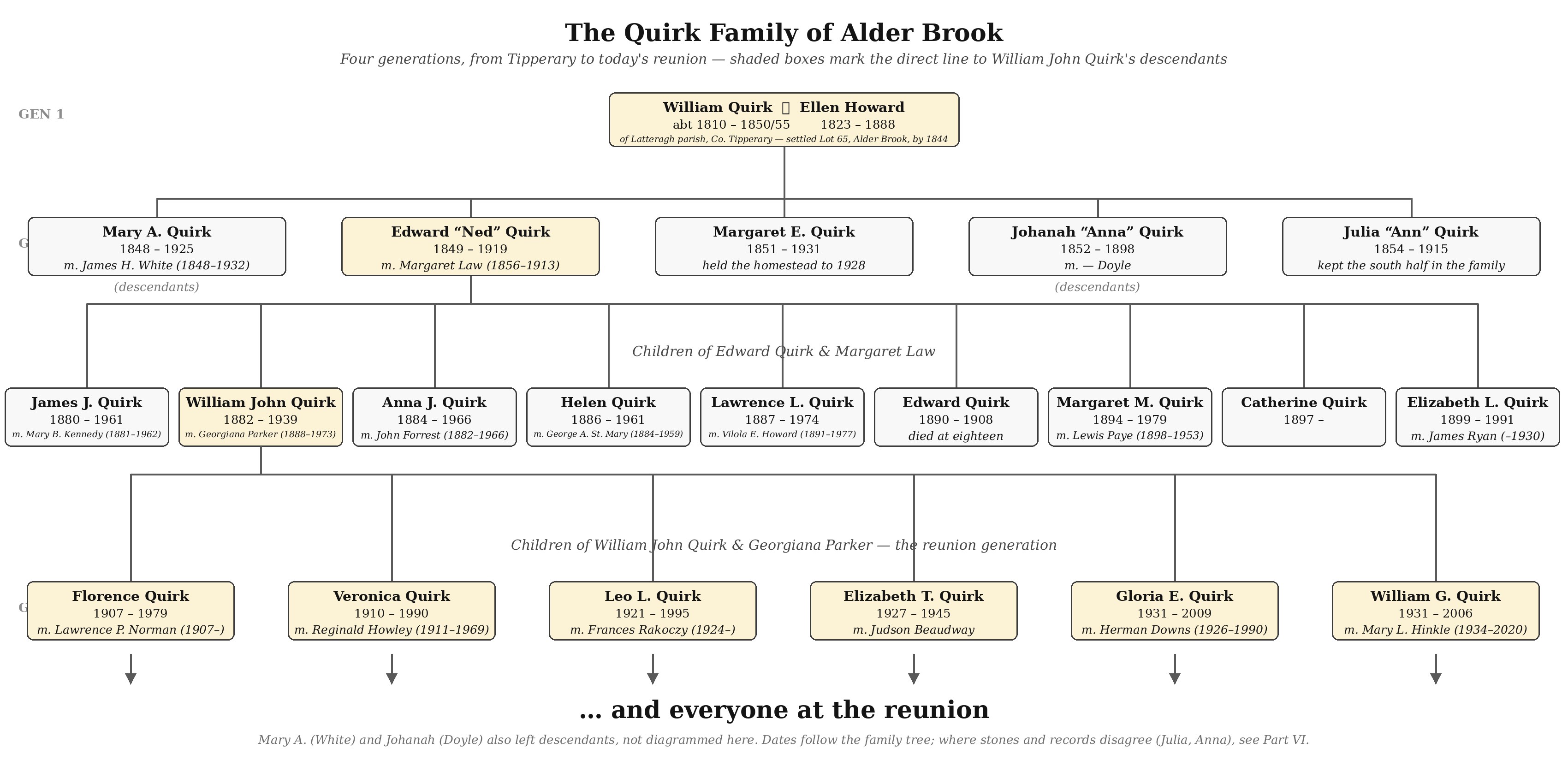
Gold boxes trace the shared line: William & Ellen → Edward & Margaret Law → William John & Georgiana Parker → the reunion generation. Mary A. (White) and Johanah “Anna” (Doyle) also left descendants beyond this chart.
Part Three · The Records
The originals behind the story. Tap any record to see it full size — these are the actual pages, found and verified by the family’s researchers.
1845 · Boston
The moment the Howards reach America: Ellen, 22, with brother Timothy, off the ship Sweden. Four months later, the Famine begins.
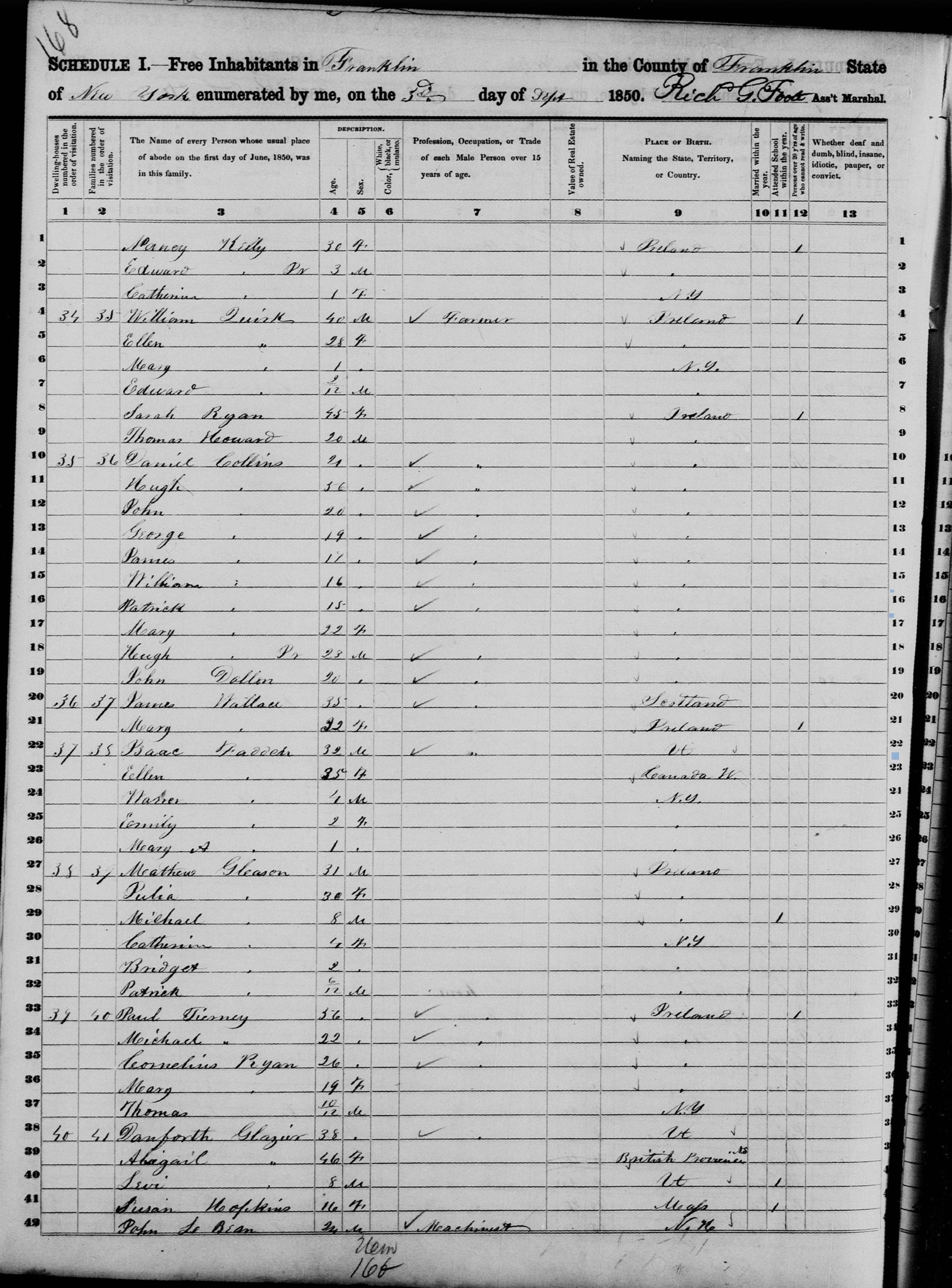
1850 · Town of Franklin
William, 40, farmer; Ellen, 28; two babies; Ellen’s brother Thomas and half-aunt Sarah under the same roof. One census, one glimpse.
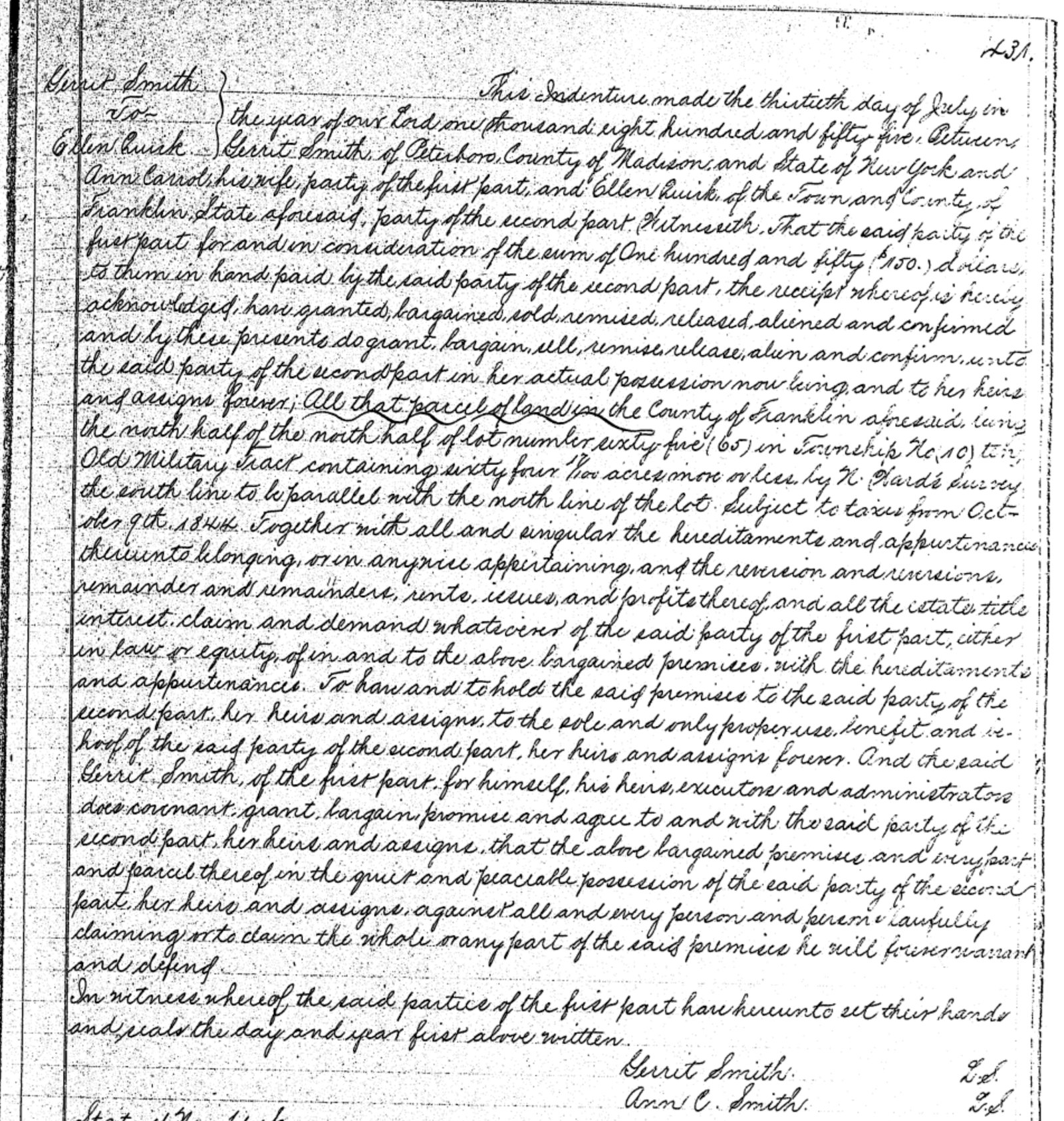
1855 · Liber 24 / 431
Ellen alone is the grantee — the quiet proof William was gone, and the founding document of the family’s eight decades on the land.
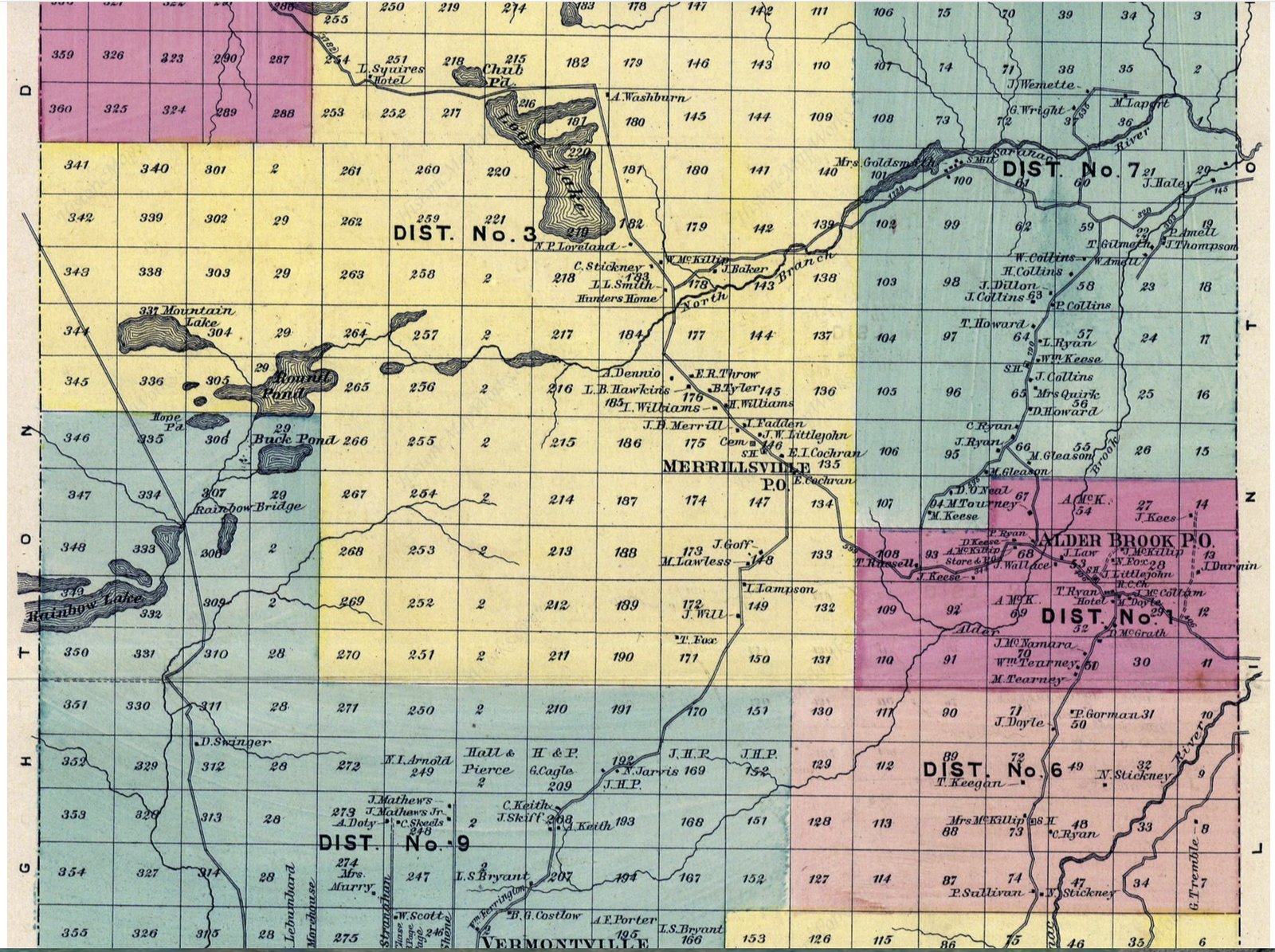
1876 · County atlas
The whole community at home at once — every neighbor a name from the ship lists, the censuses, and the cemetery.
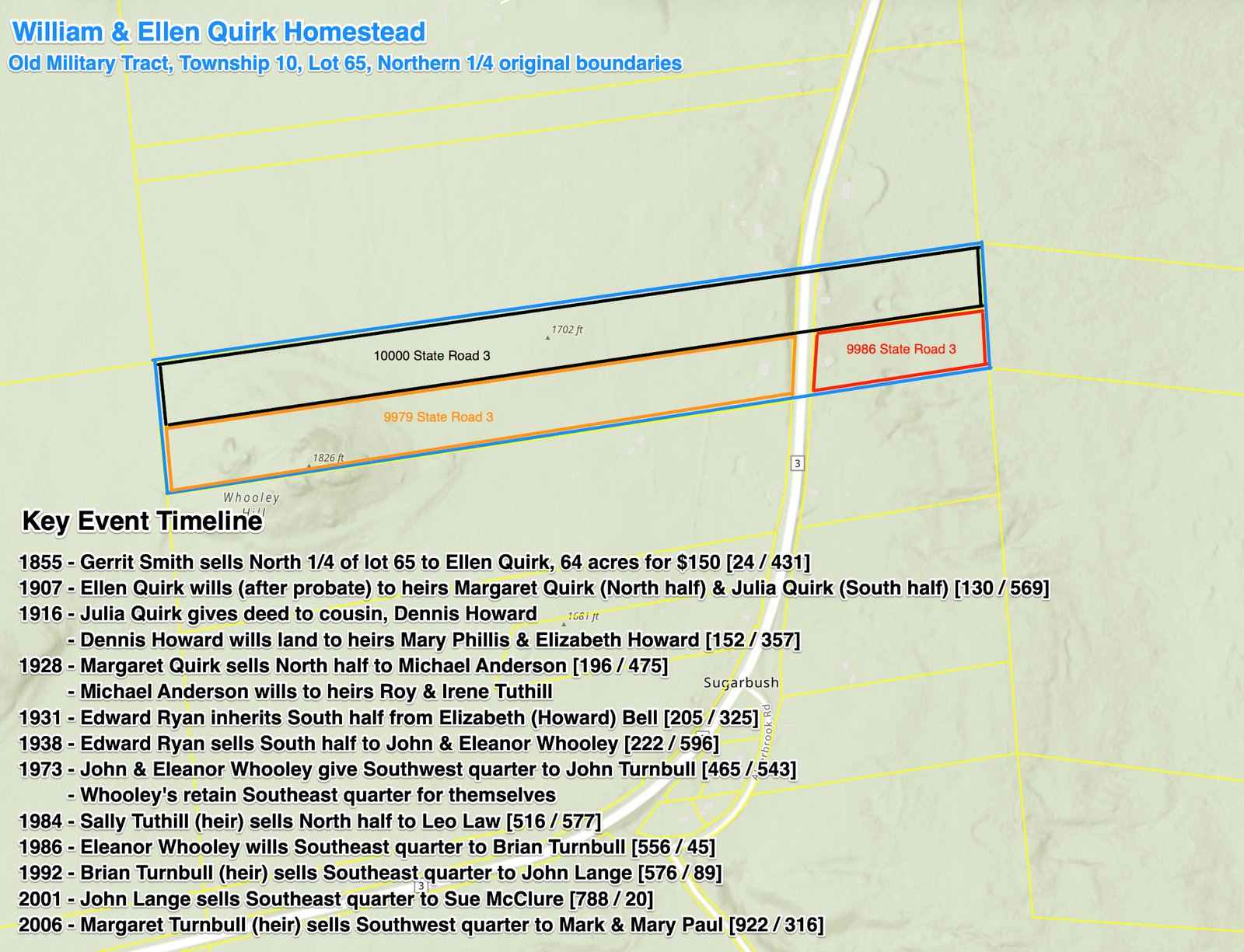
1844 → Today
The original survey lines still shape today’s parcels. Every transfer traced, deed book and page, from Gerrit Smith to the present owners.
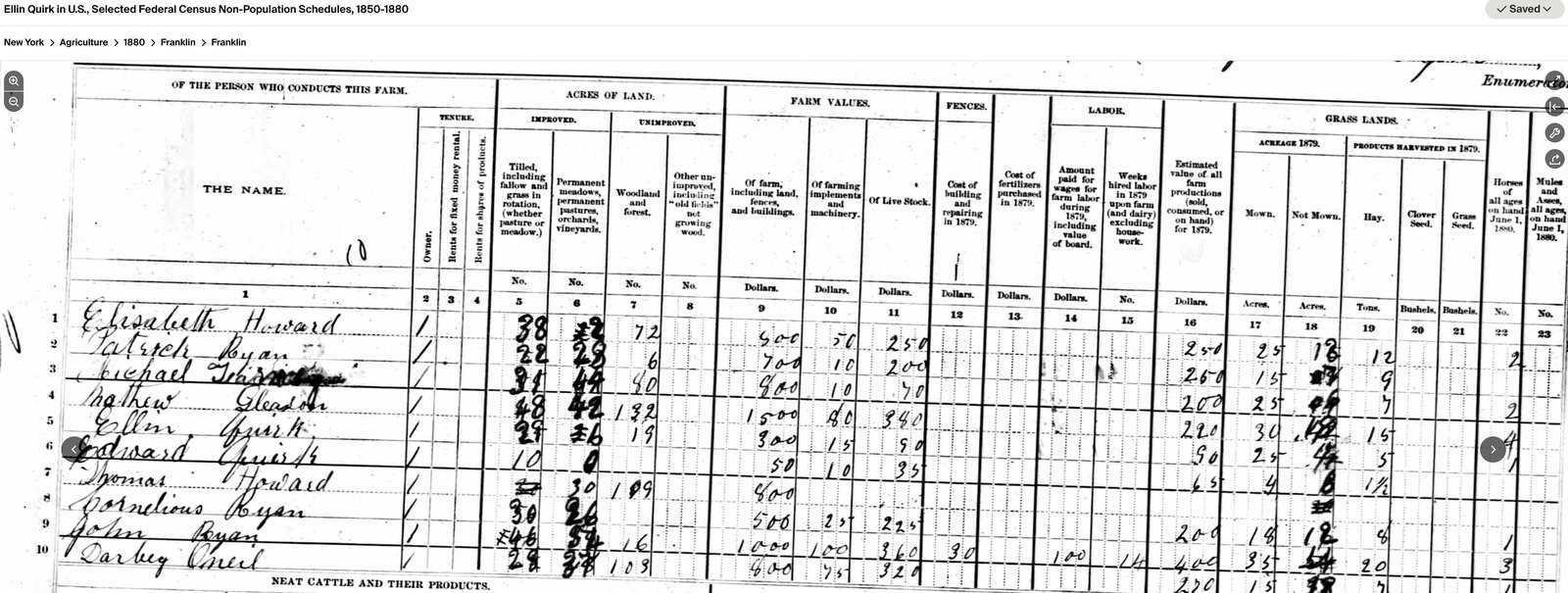
1880 · Farm schedule
The federal farm census, line by line: Ellen as owner, her tilled acres, meadow, woodland, livestock, and hay — a working hill farm run by a woman of sixty.
Part Four · Family Lore
Everything here comes from real records: deeds, newspapers, muster rolls, and stones. Some of it is documented fact, some of it is charged but never proven, and all of it is ours.
Why was a landless Irish laborer able to settle sixty-four Adirondack acres in the first place? Because the ground belonged to Gerrit Smith of Peterboro, one of the richest men in New York and one of the great radicals of his age. Smith was a founder of the anti-slavery Liberty Party, famous for granting his Adirondack lands to Black New Yorkers and selling to poor settlers on terms no speculator would offer, and later one of the “Secret Six” who funded John Brown’s raid on Harpers Ferry. William settled on Smith’s Lot 65 around 1844 and owed back taxes, not rent. In 1855, Smith sold the entire farm to an illiterate Irish widow for one hundred fifty dollars. It was exactly the kind of transaction he was famous for, and it is the reason this family’s American story begins where it does. Our land came to us through one of the most remarkable men in American history, and most of us never knew it.
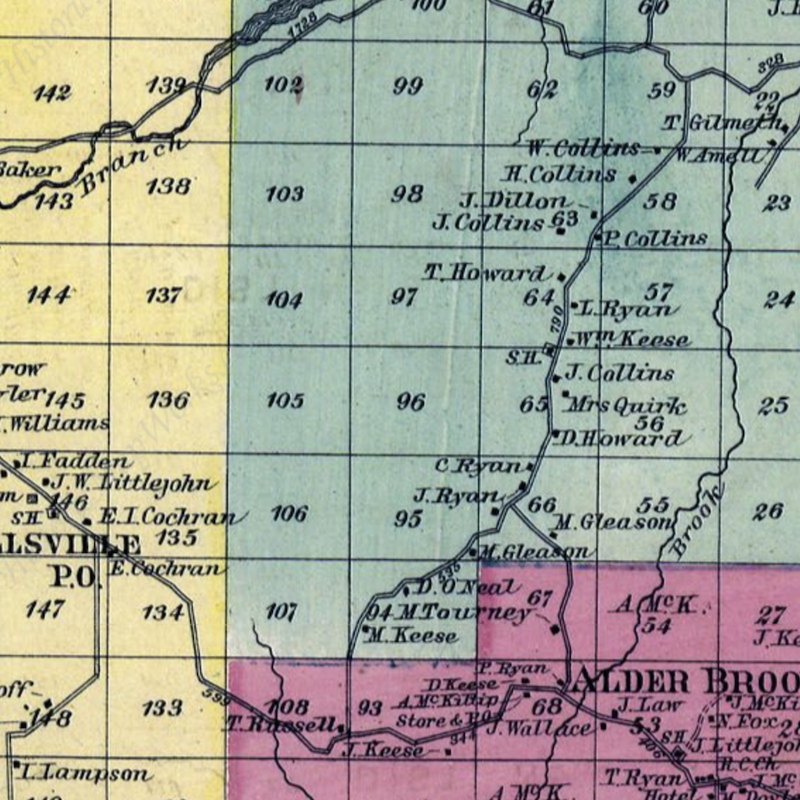
William Quirk and Ellen Howard grew up about two miles apart in Tipperary and married an ocean away in the Adirondacks. Then the pattern never stopped. Their grandson Lawrence married Vilola Howard in the 1910s. Their granddaughter Elizabeth married a Ryan in the 1920s. Their grandson James married a Kennedy, the same surname that farmed beside the Quirkes in the old townland and gave Ellen her mother. For three generations on a new continent, the family kept re-weaving the same handful of surnames from a couple of Irish hillsides, as if the Atlantic had never happened.
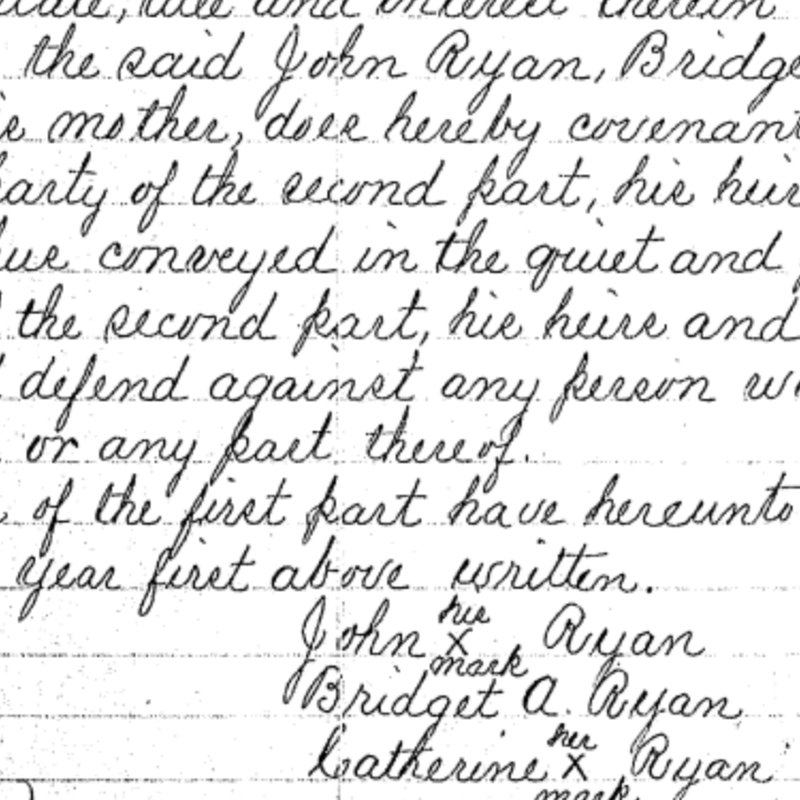
William and Ellen signed every document of their lives with an X. Their son Edward kept the official books of School District No. 7 as its elected clerk. In 1890 Edward bought a farm with the district schoolhouse standing on it, three-quarters of an acre reserved in the deed, and his own children learned to write in that building on his land. The deed itself contains the whole transition on a single page: two of the older Irish-born sellers signed with X’s while a younger one signed her name. From illiterate to keeper of the records in exactly one generation. Ellen would have understood precisely what that meant.
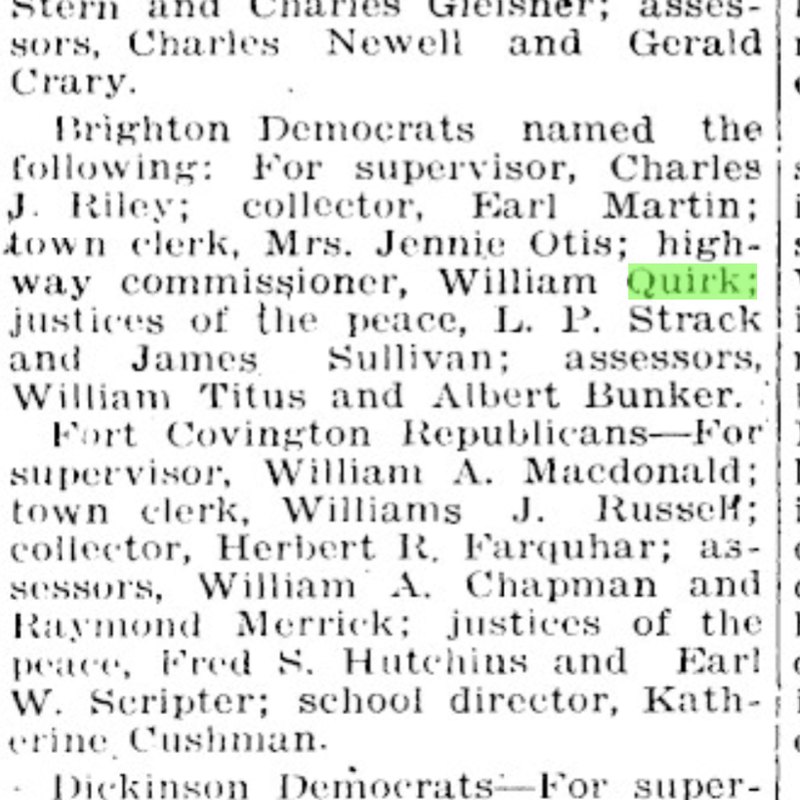
The family that occupied its land for eleven years before owning it ended up running the public works. Edward served as Overseer of Highways for the Town of Franklin in the 1880s and 1890s, his name in the annual town audits beside the Howards and Ryans he’d grown up with. By 1905 he was clerk of the school district. A generation later his son William John was elected Superintendent of Highways for the Town of Brighton, renominated in 1935, his name printed in the Malone papers. Roads, schools, and record books: the quiet institutions of a settled people, kept by the descendants of two settlers who arrived with nothing.
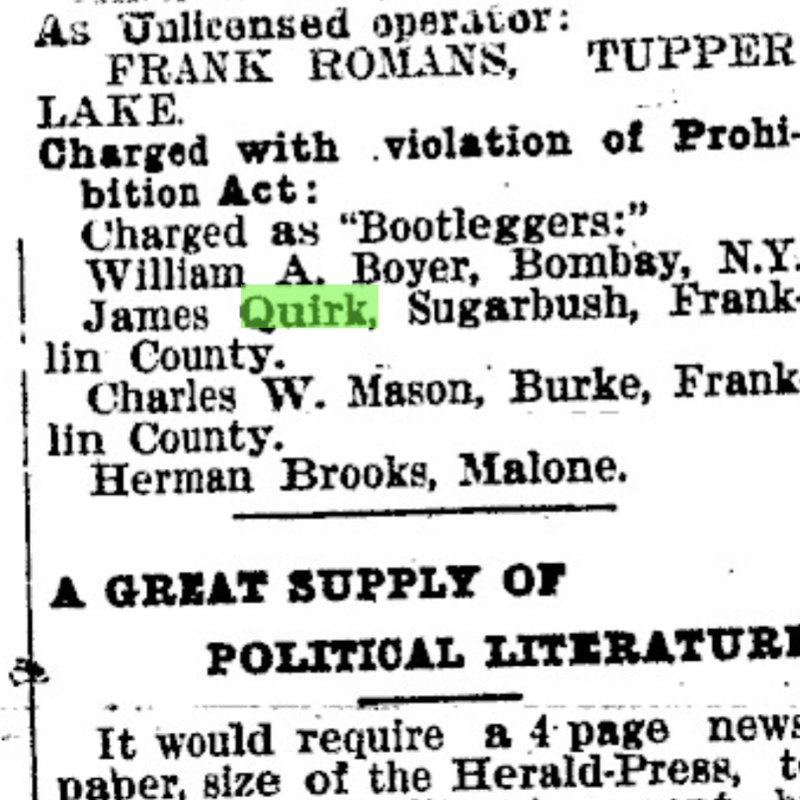
In May 1913 the papers announced that James Quirk of Sugar Bush had been appointed fire observer at Loon Lake Mountain, one of the early watchmen of New York’s brand-new fire tower system, scanning the forests his grandfather had helped clear. Thirteen years later his name appeared in the papers again, in the October 1926 Prohibition roundups: “Charged as ‘Bootleggers:’ … James Quirk, Sugarbush, Franklin County.” Franklin County sits twenty miles from Canada, and in the 1920s half the North Country had a hand in the whiskey trade. A charge is not a conviction, and no record of one has surfaced. But a man who knew every logging road and lookout in the county did possess, it must be said, certain professional advantages.
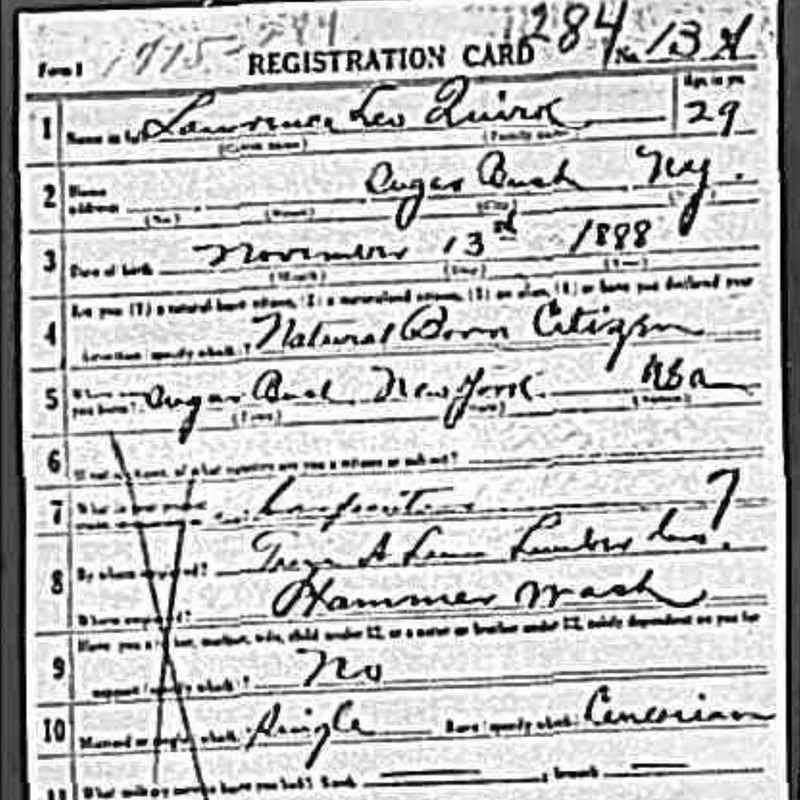
The family has worn the uniform in every generation since the Great War. Lawrence Leo Quirk registered for the WWI draft from a lumber camp in Washington State and served in France as a private in the 22nd Engineers, building military railways. He sailed home from Brest in July 1919 with his emergency contact still listed as his father Edward, who had died five weeks before the ship landed. His cousin Timothy White, Ellen’s grandson and namesake of the brother who shared her crossing, was a World War veteran dead at thirty that same year. In the next war, Staff Sergeant Leo Lawrence Quirk turned wrenches on Marine Corps aircraft at Quantico, and earned the family archive’s funniest document: a court-martial record for going AWOL at 8:15 one April evening in 1945 and surrendering himself at four o’clock the next morning, an absence of under eight hours. William Glenn Quirk enlisted in the Army at seventeen in 1949 and served through the Korea era. Terry Quirk carried the line into the modern Army with the 82nd Airborne. From a stateless arrival to five generations of service.
The family named its children by the old Irish system, and the names carry messages if you know how to read them. William and Ellen’s first daughter Mary and first son Edward point straight back at William’s parents in Tipperary, and the records there confirm it: an Edward for a father, and a widow named Mary Quirk holding the old family farm. Lawrence Leo’s nephew was christened Leo Lawrence, the name flipped and sent back out. Three Williams carried three different middle names, and the “John” long attached to the immigrant William was probably his grandson’s name drifting backward through family memory. And the system makes one prediction the records haven’t answered yet: daughter Julia’s name says there was a Julia Quirke on a Tipperary hillside, still waiting to be found.
Ellen’s probate sat unrecorded in the county books for nineteen years; her son Edward recorded his deed in three days. The hill on the old farm is named Whooley Hill, for the family that bought the south half in 1938, while the man who first cleared it lies in an unmarked grave. H. Clark surveyed the property lines in 1855, and they are still visible from the air today, unchanged. And the words a county clerk wrote into Liber 24 that summer, “lot number sixty-five,” became the family’s address on the internet a hundred and seventy-one years later: lot65.org.
Part Five · The Stone
By the time she died, Ellen had legally been Ellen Coughlin for years — a brief second marriage late in life. But the children who ordered this stone restored her, permanently, to the identity that mattered: wife of William Quirk, the husband she had buried thirty-three years before.
William lies somewhere in this same ground, in an unmarked grave from the years before the community could afford marble. Which means these five carved words are, to this day, his only monument — and around them, at St. Rose of Lima on Alder Brook Road, lie Timothy and Thomas and Dennis Howard, all five of Ellen’s children, and the Ryans, Keeses, and Gleasons of the old Tipperary neighborhood. Ten minutes from the farm. Worth the drive.
Part Six · The Land
The original sixty-four acres correspond to real, present-day street addresses along State Route 3 at the hamlet of Sugarbush: the properties at 9979, 9986, and 10000 State Route 3, running west from the highway up and over Whooley Hill. Anyone driving Route 3 between Vermontville and Bloomingdale passes through the middle of William and Ellen’s farm — and today’s parcel lines still follow the survey lines written into the 1855 deed.
The current properties are private homes, so admire from the road — but the land itself is right there.
Part Seven · Help Us
Three mysteries remain open — and reunions are exactly where missing pieces turn up. If any of this rings a bell, find Kelly or Aaron.
Sometime between September 1850 and July 1855. An old letter, a Bible record, or a story handed down could finally close the question that started this whole project.
Ellen briefly remarried between 1880 and 1886, to a man named Coughlin who left almost no trace. Ever heard the name at a kitchen table? We want to know.
Family story says he came through Canada, first of his people to cross. No ship list has ever matched him. Any handed-down detail — a port, a year, a companion — could crack it.
Photographs, letters, prayer cards, obituaries, a family Bible — anything from the Quirk, Howard, White, Doyle, or Forrest lines could open a new door. Bring it, or bring a photo of it.